
This page exists to help you order my books. The following books are listed in reverse chronological order. I've been writing books about computers since 1999, so some of these titles are decidedly out of date. Even some of these still produce an occasional e-mail from a reader, though!
I used to reference a bunch of additional titles here in one list, but it's become a bit awkward, so I'm splitting my additional recommendations off into sub-pages by topic.
The CompTIA Linux+ Study Guide: 2009 Exam is a textbook designed to help candidates pass the Linux+ exam by CompTIA. This exam is an entry-level Linux certification, so the book is an entry-level text on Linux use and administration. In addition to helping you pass the Linux+ exam, the book should prove to be a useful reference for many general Linux tasks. I also maintain a separate Web page on this book. The 4th edition, which covers the 2009 version of the exam, is due out in October of 2009. Earlier editions of the book cover earlier versions of the Linux+ exam. Approximate page count: 587 (4th edition); 539 (3rd edition).
Buy the 4th edition.
Buy the 3rd edition.
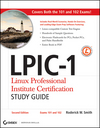
The LPIC-1 Linux+ Study Guide is a textbook designed to help candidates pass the Linux Professional Institute's level 1 (101 and 102) certification exam. This exam is an entry-level Linux certification, so the book is an entry-level text on Linux use and administration. In addition to helping you pass the Linux+ exam, the book should prove to be a useful reference for many general Linux tasks. I also maintain a separate Web page on this book. The 2nd edition covers the 2009 version of the exam. The first edition of the book covered an earlier version of the LPIC-1 exam. Approximate page count: 544 (2nd edition); 580 (1st edition).
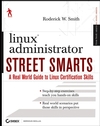
Linux Administrator Street Smarts is a textbook that's intended to supplement either a generic Linux system administration title or a certification-specific title, such as my LPIC-1 or Linux+ titles. This book emphasizes hands-on exercises to help you learn the skills you'll need as a Linux system administrator, but it's not geared to any specific exam, so you should definitely study with the objectives of any exam you plan to take in mind. I also maintain a separate Web page on this book. Approximate page count: 323.

Degunking Linux is devoted to the topic of keeping Linux running smoothly, despite the tendency of entropy to erode any complex system. Tasks covered include cleaning out user files, tweaking your desktop environment, improving software performance, and network degunking. I also maintain a separate Web page on this book. Approximate page count: 320.
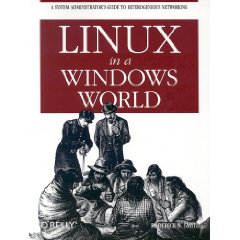
This book describes the sometimes bewildering task of interoperating Linux and Windows in a networked environment. It covers such topics as file and printer sharing, centralized authentication, remote login tools, e-mail, network backup, and a few other network protocols. I maintain a separate Web page on this book. Approximate page count: 465.

My twelfth book, The Definitive Guide to Samba 3, is, as you might guess, a book on version 3.0 of Samba. Unlike my previous Samba book, Linux Samba Server Administration, which covers Samba 2.0, this new book describes Samba and its operation on multiple OSs, including Linux, FreeBSD, MacOS X, and others. It includes coverage of Samba 3.0's new features, such as the ability to migrate a domain from a Windows NT domain controller and the new net utility. I maintain a separate Web page on this book. Approximate page count: 600.

My eleventh book, Linux Power Tools, is a guide to Linux for intermediate to advanced users. Instead of spending time on basic topics such as system installation and using basic X features, the book emphasizes issues that involve advanced or tricky configuration, such as network-based scanning with SANE, using Xft fonts, resizing filesystems, and using NTP to synchronize time between systems. This book can help you get the most out of a Linux system, but you should have at least a basic grounding in using the OS first. Because the Linux world is so diverse, this book provides explicit coverage of five popular distributions: Debian, Mandrake, Red Hat, Slackware, and SuSE. (Some online retailers incorrectly state that the book covers UnitedLinux.) I maintain a separate Web page on this book. Page count: 611.

My tenth book, FreeBSD: The Complete Reference, is a guide to FreeBSD, including information on installation, system administration, network configuration, server maintenance, desktop applications, and so on. This book was written with FreeBSD 5.0 in mind, and comes with that version of FreeBSD on CD-ROM. I maintain a separate Web page on this book. Estimated age count: 850.

My ninth book, Advanced Linux Networking, is a general-purpose Linux networking book, but its focus is unique: This book covers advanced topics and those that don't get much coverage in typical Linux networking books. For instance, the chapter on Samba includes information on using Samba's scripting features to set up a network-accessible CD-burning station, and there are chapters on time servers, font servers, and other often-overlooked servers. This book is of interest to professional system administrators or advanced Linux hobbyists who want a compact reference and tutorial to help them expand their Linux networking expertise. I maintain a separate Web page on this book. Page count: 752.
This book has been reviewed by Michael J. Jordan on Linux Online. He writes "if you want to take advantage of Linux's strengths in a networked environment, this is the book for you. I highly recommend it."
Buy from Amazon

My eighth book, Broadband Internet Connections: A User's Guide to DSL and Cable, describes how to get the most out of a high-speed Internet connection. The book begins with a discussion of the technologies involved (DSL, cable, satellite, and so on), proceeds on to hardware and software configuration, and moves on to discussions of running popular servers, sharing a connection among several computers, and broadband security issues. I wrote the book with small businesses and home users in mind, and especially those who want to go beyond merely browsing the Web at high speed. Broadband connections open up a world of possibilities that aren't often explored with dial-up connections, and this book serves as an introduction to these possibilities. I maintain a separate Web page on this book. Approximate page count: 600.
Buy from Amazon

I wrote Linux System Administration, part of Sybex's Craig Hunt Linux Library, in conjunction with Vicki Stanfield. This is a book on Linux fundamentals. It can be used as an introduction to Linux for those unfamiliar with the OS, or as a reference for experienced administrators. The target audience of this book is computer professionals -- people who want to learn Linux because it's required in their jobs, rather than casual home users. Of course, home users can also get a lot out of this book, but it doesn't cover the sort of material many individual Linux users need, like rundowns of Linux productivity applications. This book includes chapters on installation, startup and shutdown procedures, account maintenance, security, software administration, Linux filesystems, backups, printing, networking, the X Window System, and troubleshooting, among others. In 2002, a second edition of the book became available. You can still find the first edition, if for some reason you want the older version. Page count: 624.
Chapters 6, 12, and 15 of this book have been excerpted in Sybex's
Linux
Complete.

My Linux Samba Server Administration, part of Sybex's Craig Hunt Linux Library, is marketed as a book on Samba for Linux. Most of the book is applicable to Samba running on other platforms, but when appropriate, the book emphasizes the Linux options, such as smbmount vs. smbwrapper and common Linux binary packages. Whenever applicable, I've presented examples of the use of features to do useful and interesting things, such as using pseudo-printers to create PDF files or preexec/postexec scripts to create CD-R image files. I've tried to create a book that's packed with useful information without being difficult to read. This book covers through Samba 2.0.7, with additional comments on the experimental Samba TNG release. It has no companion CD-ROM. I also maintain a Web page devoted to additional information related to this book. Page count: 600.
A review by Matt Franz in the February, 2001 issue of Cisco's Security Bytes Newsletter called this "simply the best book on the Samba in print" and went on to say that "it should be required reading for any UNIX admins who must deal with Windows boxes on a regular basis."
Chapter 14 of this book, "Samba Security Considerations," has been excerpted in Sybex's Security Complete. Chapters 1-5 have been excerpted in Sybex's Linux Complete.

My Linux Hardware Handbook is devoted to the topic of Linux's interaction with hardware. I cover all the major hardware devices, such as the CPU, motherboard, SCSI host adapter, printer, and so on. For each component, I outline what it does and what special concerns you as a Linux user should have about the device, such as where to go to find drivers and what you can expect in the way of reduced, the same, or improved hardware functionality compared to Windows or other OSs. I also maintain a Web page devoted to additional information related to this book.
Buy from Amazon

My Multi-Boot Configuration Handbook covers the installation, use, and maintenance of multiple operating systems on a single x86 computer. The book begins with background information on the x86 PC architecture and progresses on through partitioning, OS installation, data exchange, common utilities, emulators, and modern hardware selection. It's designed to be of use both to those who are new to multi-OS configurations and to those who've been doing it for years but who need to add a new OS or want to optimize their existing configurations. I also maintain a Web page devoted to additional information related to this book.
According to Amazon.com, people who bought this book also bought Red Hat Linux Network Management Tools, Internet Core Protocols: The Definitive Guide, Oracle 8i: The Complete Reference, and Professional Linux Deployment.
Buy from Amazon

My Linux: Networking for Your Office covers using Linux as a server in a small office or home office (SOHO) network environment. The focus is on file and printer sharing (using UNIX, Windows, and Macintosh protocols), and on internet connectivity (PPP links, DSL and cable modems, IP masquerading). The book also contains information on basic network configuration, using Linux remotely via Telnet, SSH, or X, and more. Although marketed for corporate buyers, this book is also great for those wanting to set up a private home network. As of December 7, this book hasn't appeared on store shelves, but it should any day now. (Note: The original working title for this book was SOHO Linux Networking, and some retailers list it by that title as of December 7, but the title changed late in the production process.) I also maintain a Web page devoted to additional information related to this book.
According to Amazon.com, people who bought this book also bought Linux Network Servers 24Seven, Maximum Linux Security, The Cathedral and the Bazaar, Teach Yourself GIMP in 24 Hours, Red Hat Linux Network Toolkit, Linux Administration: A Beginner's Guide, PHP Essentials, and Building Linux and OpenBSD Firewalls.
Buy from Amazon

My Special Edition Using Corel WordPerfect 8 for Linux covers features of WordPerfect that are common across platforms, such as how to create multi-column layouts or perform a mail merge. In addition, the book covers Linux/UNIX-specific features, such as installing fonts and printer drivers, sending faxes from WordPerfect for Linux, and using Linux/UNIX filesystem features such as links to best advantage with WordPerfect. This book will suit you well if you need a comprehensive guide to WordPerfect for Linux. This book is also available in a boxed set along with Special Edition Using Linux, 5th Edition and Partition Magic, including Red Hat 6.0, Caldera OpenLinux 2.3, and Debian 2.1 CDs. (I don't know what version of Partition Magic is in this package, though.) You may also want to check my web page devoted to fonts and printers under WordPerfect for Linux.
Buy from Amazon
If you have problems with or comments about this web page, please e-mail me at rodsmith@rodsbooks.com. Thanks.
Return to my main web page.